
Be Discerning
A Letter to Myself on Social Media

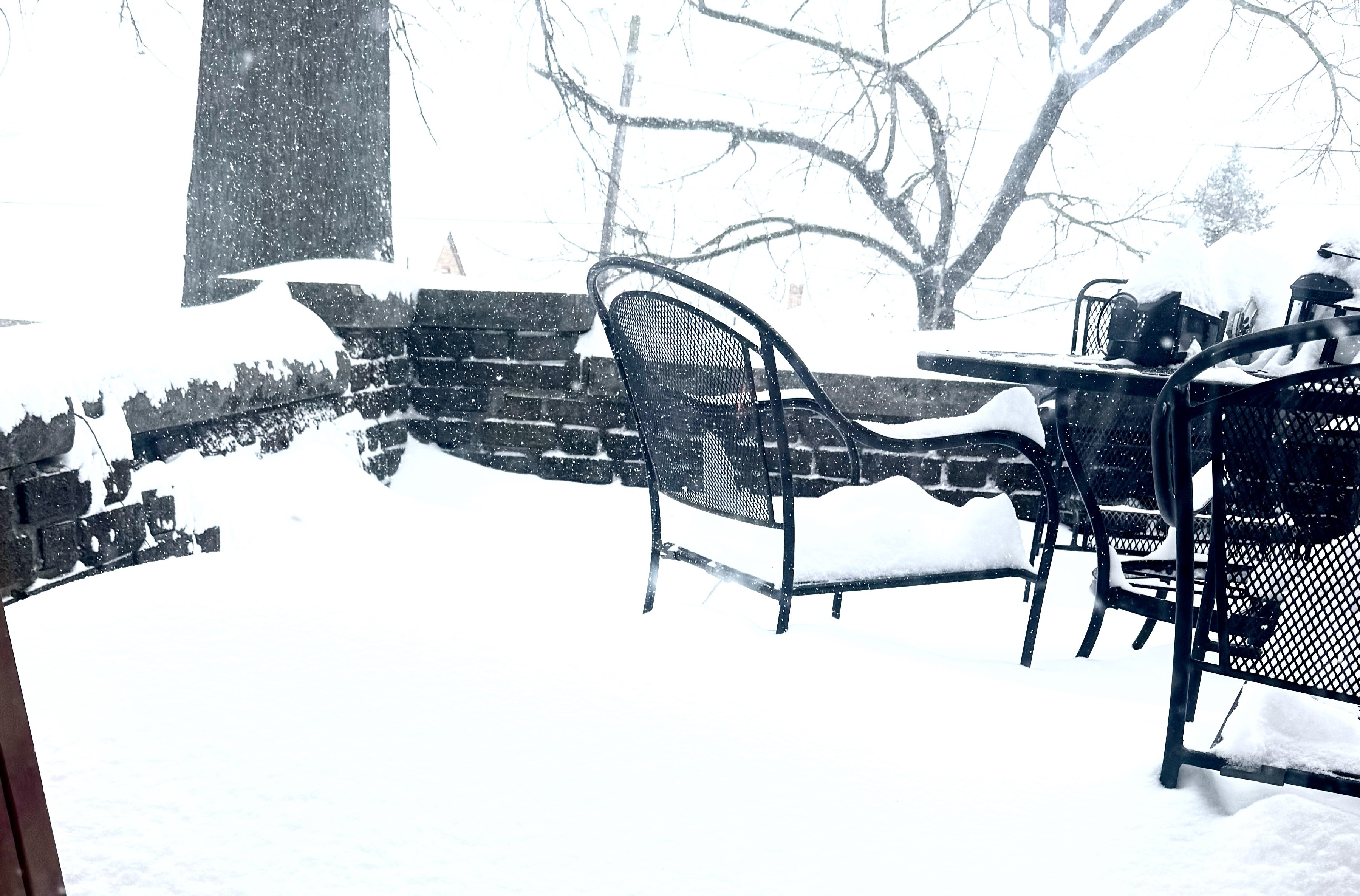
Today, the sun is shining. Yes, it’s shining because it’s 9 nine degrees below zero, and the air is too cold for clouds to form, but I will still take it. It actually makes for a nice change from the unrelenting gray we’ve had every other day this month.
We are, like much of the U.S., deep, deep, deep in the trenches of January here in the Ohio Valley. That’s true outside, where the 21 inches of snow that fell last weekend is frozen fast to the ground, with no signs of a thaw in sight. And it’s true inside, where the stomach flu has been making its way through the Chapman family, felling even me.
Last week, I had promised an essay exploring the question, “What does it mean to be human?” That essay, however, requires deep work, and deep work is not the sort of work I’m capable of when sick children are interrupting me every five minutes. You would think, with Chris home, this would be a bit easier. But Mom is Mom and Dad is Dad., and there are times when only Mom will do. Plus, Mom has been sick herself, and the stomach flu and good writing don’t generally go hand in hand.
Which is to say, I’m punting. Next week, we’ll talk about the Church’s teaching on what it means to be human. This week, instead, I’m going to share something I wrote several years back, in the long Summer of 2020.
The essay is a short one and comes from my book Letters to Myself from the End of the World. For those of you who haven’t read it, every chapter is what the title says it is: a letter to my younger self (my 25-year-old self to be exact). The book covers a range of topics, from prayer and motherhood to social media and scandals in the Church, but it is, in its essence, a reflection on how, in the midst of a deeply broken world, we can answer Christ’s call to grow in Christian maturity.
The letter I’m sharing today is from the section on social media. I received a message this week from a women who is currently reading the book (Hi, Marcy!), and she wanted to thank me for this section in particular, which (unfortunately, like the rest of the book), seems to have grown more relevant, not less, over the last six years. After reading her note, it seemed like maybe sharing the letter in whole, here, might be a helpful thing to do.
Before we get there, though, I want to make it clear that this was written in July 2020, in the midst of Covid and another crisis in Minneapolis. It was not a statement about what I thought regarding those events then, and it is not a statement regarding what I think about other events now. It’s not meant to diminish their importance, their gravity, or Christians’ obligation to have well formed (and well informed) opinions about them. Rather, it is a statement about what I think about social media, especially Instagram, Facebook, and TikTok, as a forum for discussing those opinions. Please, take it as such.
Also, if you happen to be one of those people who excels at talking about current events online, without failing in charity or succumbing to anger, self-righteousness, vanity, or pride, then this letter is not directed at you. I tend to think you are the rarest of birds, but I know you exist. I am glad you exist. I am glad God has called you to this apostolate. It’s sorely needed. So, don’t take this letter as a judgement on you. It’s not. It’s a judgement on me.
“Be discerning.”
July 14, 2020
Hawthorne House
Dear Emily,
People are angry with me. People who used to respect me no longer do. Not a lot of people, and most are strangers, but it still stings.
You know this feeling. You may only be twenty-five, but the opinions that tend to burst unthinkingly out of your mouth have ticked off plenty of people in those twenty-five years. Here’s the irony, though: The people angry with me now are angry because I won’t share my opinions. A couple years back, I set a rule for myself: no talking about current events online. So, no political opinions, no hot takes on the news of the day, no quick reactions to headlines unless it’s something about which I have deep knowledge and experience.
My rule sounds incomprehensible to you, doesn’t it? Having an audience of tens of thousands of people, and not taking every opportunity to share my thoughts with them on the news of the day? Why on earth would I do that? That’s your dream, and I’m thumbing my nose at it.
I promise, I don’t have fewer opinions than you, Emily. If anything, I have more. Experience, however, has taught me to exercise more control over how and when to express those opinions. I know now, like you don’t, that at certain times and in certain contexts, regardless of what other people want me to do, it’s wrong to share my opinions. It’s not helpful to others, and it’s spiritually dangerous for me. That’s particularly true when it comes to talking about the news of the day on social media.
Over the past twenty years, the Internet has gotten a heck of a lot louder than the Internet you know. It’s not just writers reacting to news and sharing their opinions. It’s everybody. Or almost everybody. It doesn’t matter if your normal content is about paint colors or cookies, when something big happens in the world, everyone has an opinion. Everyone shares their opinion. Everyone demands everyone else’s opinion. And they demand it right away.
For a while, I happily went along with those demands. For a time, I offered quick and copious commentary on what was happening in Washington, Rome, and wherever news broke. My reactions were instant, witty, and cutting. I got attention for that, and my audience grew.
Then, I started to realize a few things.
First, I realized that my instant commentary was often wrong. Sometimes, it was wrong because the news story to which I was reacting was wrong. Reporter bias influenced the story or there just wasn’t enough information to ensure accurate reporting. Often, though, my commentary was wrong because I was wrong. I didn’t know what I didn’t know. So, I started to slow down, to pause before posting reactions. As I did, I discovered that by not reacting immediately—by waiting, watching, and reading what people more knowledgeable than I had to say—the opinions I formed about events became more nuanced and thoughtful. They became more grounded in truth. Which is important.
Second, I realized that my online discussions about contentious political topics weren’t all that fruitful. More often, they were the opposite. They were destructive. They tempted me to write things I would never say to a person’s face, and they tempted the people writing to me to do the same. Because I didn’t know the person with whom I was engaging, because I couldn’t see a face, hear a voice, and observe the one hundred different ways a body communicates, I said the wrong things, things that weren’t helpful. And because people didn’t know me, see me, or hear me, they interpreted my words through the lens of their own experience or wounds, often missing my point entirely. Eventually, I concluded that if I wanted my conversations about difficult topics to bear fruit, ninety-nine times out of one hundred, it’s better for me to have those conversations in person, not online.
The third reason I stopped talking about politics and (most) current events online is because I didn’t like how it affected me. I didn’t like the person I was becoming. Fighting with strangers online hardened me. It cemented my opinions of my own rightness and righteousness. It prevented me from listening to others’ stories and others’ opinions. It tempted me to treat people who disagreed with me as less than human. It also tempted me to be more cutting, more sharp, more inflammatory. Because again, that’s what got the likes. That’s what got the follows. That’s what got people sharing and resharing and telling me how brave I was, how good I was, and how I shouldn’t listen to anyone who disagrees with me because they’re part of the problem.
Last but not least, I started holding my tongue because I wasn’t the only one being cutting online. Not by a long shot. Posts that reduced those on the other side of an issue to the evil “other” filled my feeds. From both left and right, I saw the same problems: an inability to love our enemies, a lack of respect for human freedom, and the absence of justice in the quest for justice. People who claimed to be Catholic, who claimed to be pro-life or anti-racist or a friend of the poor, refused to be friends with anyone who approached an issue even slightly differently from them. They misunderstood each other and misrepresented each other. They demonized the other. And not surprisingly, they didn’t listen to one another. They still don’t.
As a culture, we’ve forgotten we are brothers and sisters, made in the image of God. From that forgetting flows not only online vitriol but also every other injustice about which we’re fighting.
So, that’s what I decided to focus on. For the most part, I left writing about the headlines behind and began focusing on helping people understand the love God has for them and the dignity of the human person. I hoped that if more people could experience that love and see that dignity, then they could finally start caring about justice.
I don’t know if it’s working. People are still yelling. But it is helping me. Listening while everyone else is talking is teaching me humility. It’s also helping me grow in patience and compassion. I don’t go on social media to be right anymore. I go on to listen and share what I think God wants me to share. Which makes for a more peaceful, loving Emily all around.
This way of engaging online isn’t for everyone. Nor should it be. God has uniquely equipped and called some people to tackle the tough news of the day on social media. You’re just not one of those people, Emily. It’s bad for your soul. It’s bad for a lot of people’s souls. They would see this if they took more time to reflect and discern.
Be discerning, Emily. Be discerning about what you post on social media. Be discerning about how it affects you. And be discerning about how it affects others. In an ongoing way, pause and ask yourself what fruit your online interactions are bearing and how those interactions are shaping your soul. Does what you post contribute to thoughtful discussions, or does it lead to polarizing arguments? Do your posts primarily attract people who are kind and respectful to your comment boxes, or do they attract people who are angry, bitter, and cruel?
And what about you? Are you becoming more thoughtful, more faithful, and more loving, both to those who agree with you and to those who disagree with you? Or are you becoming more angry, more hostile, more prone to rash judgement? Do your disagreements become personal? Can you disagree with someone without insulting them? Are you able to bear the wrongs done against you patiently? Is social media making it more difficult for you to see and treat everyone as the image of God? Is it exacerbating other sins with which you struggle—vanity, envy, greed, pride?
You also need to consider whether your posts and online interactions are becoming a source of scandal or an occasion of sin for others. How well do you understand the topics you’re posting about? Are you helping people see the world more clearly or are you just adding to the confusion? Are you inviting people to belittle or dehumanize others? Are you allowing detraction or calumny in your comment sections? Are you fanning the flames of anger, hatred, or ignorance with polemical posts rooted in emotion rather than reason, facts, and faith? What is your writing or your sharing doing to other people’s souls?
For some, this process of discernment will help them engage more fruitfully online. For others, it might make them do what I did and bow out of certain discussions or approach important topics from a different angle. Either way, it’s this kind of discernment that will make us the kind of witnesses Pope Benedict XVI called for, the kind who enable “the infinite richness of the Gospel to find forms of expression capable of reaching the minds and hearts of all.”[i]
You have to be your own harshest critic with social media, Emily. Online, it’s easy to lock yourself in an echo chamber where you only hear the voices that offer agreement and praise. In that echo chamber, you can get comfortable. You can start to believe yourself righteous when you’re anything but. Honest, ongoing discernment will help check that tendency. And you need to check it. No matter how right your opinions or how righteous your intentions, if what you post on social media is becoming an occasion of sin, for you or others, it’s time to step back and reevaluate. You can’t help Jesus win souls if you’re destroying your own.
Blessings,
Emily
Five Fast Things
This week’s episode of Visitation Sessions (“The Blind Leading the Blind”) looks at the problem of social media and current events from a different angle, talking about how the constant noise of social media (along with the 24 hour news cycle, the death of newspapers, and more) have made it harder, not easier for people to understand the world and what is happening in it.
After spending an entire newsletter talking about the dangers of social media, I do want to applaud someone who is doing it well. Marie Mazzanti’s recent reel on the Church’s teachings on immigration was fantastic, not only because it accurately and succinctly summarized that teaching, in all its nuance, but also because it pointed viewers beyond the short reel to the relevant Church documents. In that, it was an encouragement to get off social media, go beyond the bullet points, and understand the issue more deeply. Social media is not enough. News stories are not enough. The goal is always to be deeply formed by the Catholic vision of God, man, and the world, and then interact with the news of the day from there. Her reel aimed to help people do that, so big round of applause. If you are still on Instagram, do check it out.
We’ve spent the past couple weeks color drenching our pantry in Farrow & Ball’s “Dead Salmon.” No, it’s not the color of a dead fish. The name refers to the dead flat finish of a salmon colored room in a historic British estate, and it is a lovely dusty pink that sometime looks a touch purple and sometimes a touch brown, rather like a mushroom. I’m thrilled with it and will share pictures once the shelves are done curing and I’ve moved everything back into it. Anyhow, 10 out of 10 recommend painting some room of your house a lovely shade of pink as good medicine for the January blues.
Also high on my list of January survival tips is Simply Merino long underwear. I’ve recommended this many, many times for kids, but they have great options for adults, too. Our house is so old and so drafty, with windows that leak and walls that don’t have even a shred of insulation, so wearing their base layers under my other layers of wool and corduroy is helping me not spend all day every day under piles of blankets. And yes, they’re super soft—not scratchy at all. No code. Not an affiliate. Just grateful for being a lot less cold than I otherwise would be.
If you, like us, are prepping a child for their First Confession and First Communion, Katie and Tommy McGrady’s newest book First Reconciliation and Beyond is a simple, practical, and accessible resource to help you engage in the kinds of ongoing conversations with your child that are (IMO) the most important part of sacramental prep. Also make sure to check out its companion book, First Communion and Beyond.

Joseph, Keeper of the King
I feel like I need to say this in a whisper, but … I have a new book coming out: Joseph, Keeper of the King. This is the fourth book in the children’s series I’ve done with Scott Hahn (the other three titles are Mary, Mother of All; The Supper of the Lamb; and Lord, Have Mercy). The release date is, of course, March 19, Saint Joseph’s Feast Day, so just give me a moment while I steel myself for another book launch. I’m not ready. You’re probably not ready. But hopefully by March, we’ll both be ready. On the positive side, it is my favorite book in the series yet. So, there is that. You can pre-order the book now, through the St. Paul Center as of this week or you can pre-order it through me starting March 1. (Orders placed directly through me will come signed). I’ll keep you posted on cut off shipping dates for Easter as we get closer.
Helpful Links
[i] Benedict XVI, Message for the 47th Annual World Communications Day, May 12, 2013, http://www.vatican.va/content/benedict-xvi/en/messages/communications/documents/hf_ben-xvi_mes_20130124_47th-world-communications-day.html.
Not writing an essay on being human because you have the flu seems a very human thing to do! Haha
I hope you all are feeling better very soon! 🙏🏼
Thank you for sharing this. One thing that struck me was the possibility of causing scandal through what you share on social media. There really is an obligation to speak truth and not add to the confusion by half truths.
In your intro, you spoke of the obligation of Christians to be well informed and formed about important issues facing us today…but gosh, I’m struggling with that. I almost want to bury my head in the sand. There is so much noise,
that threatens to disturb our peace. I have my obligations to my family and my small circle of influence. Having well-formed opinions takes time. Any thoughts or encouragement on that?